
New Tree Regulations in Effect Jan. 23, 2026
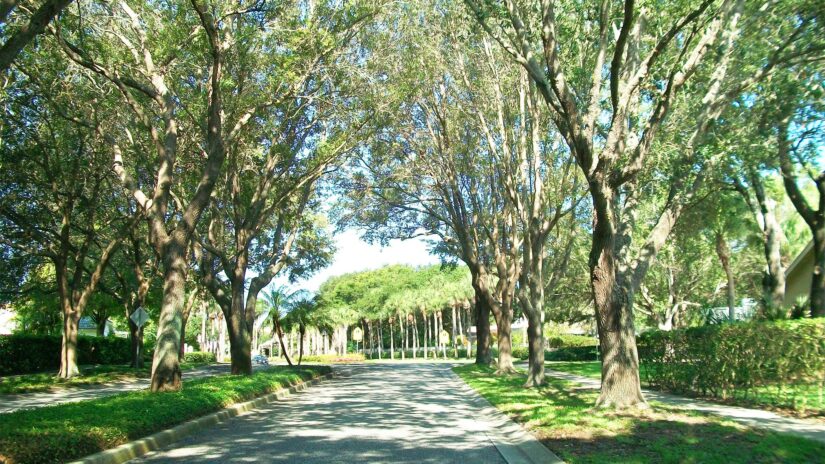
Pinellas County Commissioners adopted revised tree regulations aimed at improving clarity, flexibility and achieving better environmental outcomes based on site conditions. The changes simplify permitting thresholds, update mitigation requirements and prioritize preservation of high-quality trees and native plantings.
Property owners are encouraged to review the updated requirements before removing trees.
Why the County Cares About Trees
Trees provide urban canopy, the layer of leaves and branches across our neighborhood. It actis as a “green ceiling” that cools our streets and manages rainwater. By preserving this canopy, we protect the natural shade and habitat that directly improve the air quality and comfort of our local community. important benefits to Pinellas County residents, including heat mitigation, stormwater management, habitat, and improved quality of life. The updated tree protection regulations help preserve these benefits while ensuring that requirements are understandable and environmentally effective.
Purpose
The revised tree protection regulations were developed to:
- Create simpler and more consistent permitting standards
- Better align tree mitigation with environmental value and site conditions
- Encourage the removal of invasive and nuisance species
- Reduce confusion caused by overly complex requirements and provide more flexibility
- Maintain and enhance the county’s urban canopy in a practical and enforceable way
Reference the Complete Ordinance
The updates consolidate tree protection requirements into a new Tree Protection Ordinance within Chapter 58 of the County Code, which applies countywide where not superseded by municipal ordinances.
Applicability and Tree Protection Thresholds
Under the updated regulations:
- Trees with a trunk diameter* of 4 inches or greater and palms more than 6 feet in height require a permit for removal, effective removal, or transplanting.
- On homesteaded, actively occupied single-family residential properties, only trees greater than 24 inches in diameter at breast height (DBH) are considered protected.
These thresholds reflect differences in lot size, land use and feasibility of on-site mitigation while continuing to protect large, high-value canopy trees.
Defining Diameter
A tree’s diameter is measured 4.5 feet above the ground. This measurement is called the Diameter at Breast Height or DBH. Diameter is equal to the circumference of the trunk divided by 3.14.
The property must be actively used as a single-family residence (i.e. not vacant, rented, or being demolished for redevelopment).
Tree Rating and Mitigation Requirements
The updated ordinance simplifies the tree rating system, which evaluates trees based on health, condition and species characteristics. This system replaces prior mitigation formulas and establishes replacement requirements that scale with a tree’s environmental value.
- Dead, dying, invasive or nuisance trees require no mitigation when removed.
- Healthy, high-quality trees require replacement at higher rates.
- Replacement requirements are based on tree size and condition rather than a single “inch-for-inch” standard.
Replacement trees must meet minimum size and quality standards, prioritize native species, and be installed in a manner that supports long-term canopy growth.
Encouraging Native Vegetation and Canopy Function
The ordinance allows enhanced mitigation credit when replant trees are combined with native understory and groundcover to form native vegetative communities. This approach supports:
- Improved tree survival rates
- Greater ecological value
- Increased shade, stormwater interception, and habitat benefits
Where on-site replacement is not feasible, alternatives such as off-site planting, tree relocation, or contributions to the County’s Tree Bank Fund may be approved.
Enforcement and Compliance
The County retains enforcement authority for unauthorized tree removal. The ordinance establishes clear penalties for violations, including replacement requirements, monetary penalties, and corrective actions where necessary. Existing code enforcement and permitting processes remain in place.
Apply for a Tree Permit
For instructions on how to apply for a tree removal permit, visit this page.
To learn more about the County’s habitat permit and environmental compliance regulations, visit pinellas.gov/treeremoval.
Residents with questions about tree protection requirements or permitting are encouraged to contact Building & Development Review Services staff for additional information. Call 727-464-3888 or email treepermits@pinellas.gov for more information.