Beckett Bridge History
Welcome
Thank you for visiting to learn more about the history of the Beckett Bridge in Tarpon Springs, FL.
Beckett Bridge: Cultural Resource Reports
- Final Cultural Resources Assessment Survey Report
- This survey identifies cultural resources within or near the Beckett Bridge and assesses their eligibility for listing in the National Register of Historic Places.
- 106 Effects Consultation Case Study Report
- This report was developed as part of the Project Development & Environment (PD&E) study to evaluate alternatives to remove, rehabilitate, or replace the existing Beckett Bridge.
Beckett Bridge Historical Timeline
1918 – 1920s | Post-WW1 Boom, Tarpon Springs Emerges as a Tourist Destination
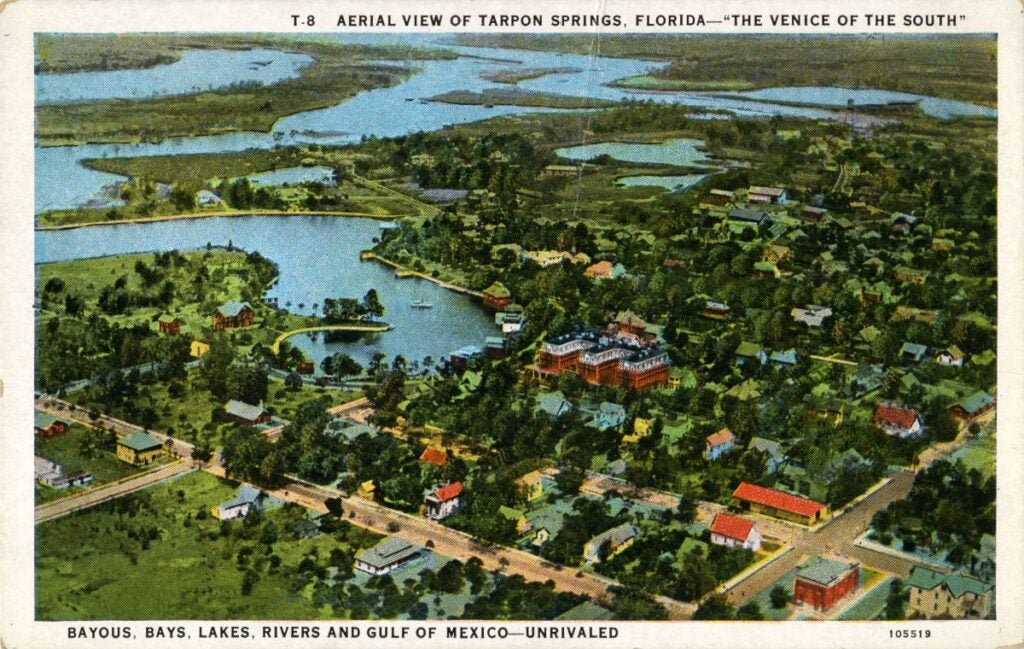
As World War I ended, prosperity began to spread once throughout the U.S. Florida, in particular, experienced this upswing as construction, production, and population in the state quickly increased. People were drawn to the year-round warm weather, plus automobiles and improved roads made the state more accessible. Additionally, Florida did not have the state income or inheritance taxes of other states.
Southeastern Florida, including cities such as Miami and Palm Beach, experienced the most activity, although the boom affected most communities in central and South Florida. Tarpon Springs also experienced the effects of the Florida Land Boom, although its growth did not accelerate at the intense rates experienced by some other Florida communities. New subdivisions were platted to make way for the expected new houses and businesses and previously underdeveloped areas saw more growth.
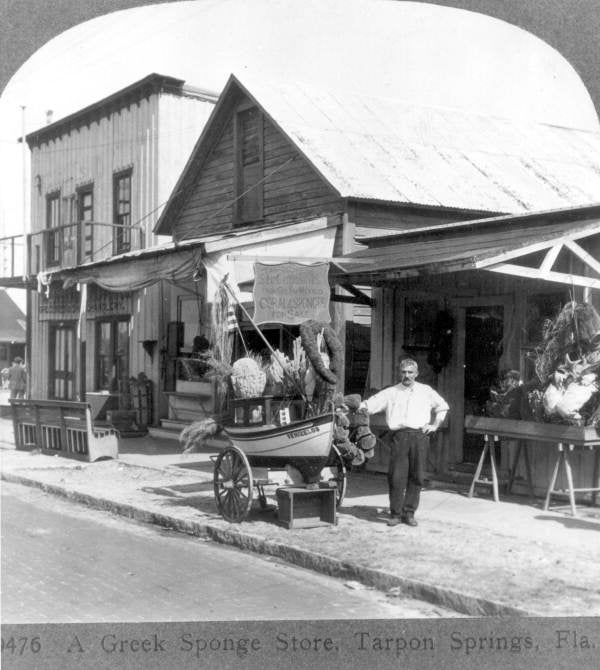
Tarpon Springs was once again heavily promoted as a tourist destination during the Boom years, and many of its visitors drove and stayed a shorter time than their counterparts at the end of the preceding century (Historic Property Associates 1988:11). Some of those involved in the sponge industry were already searching out other ways to make a living during these years, recognizing that the winter residents were not interested in sponges. The first Greek curio store opened during the 1920s.
1924 – 1926 | Initial Construction
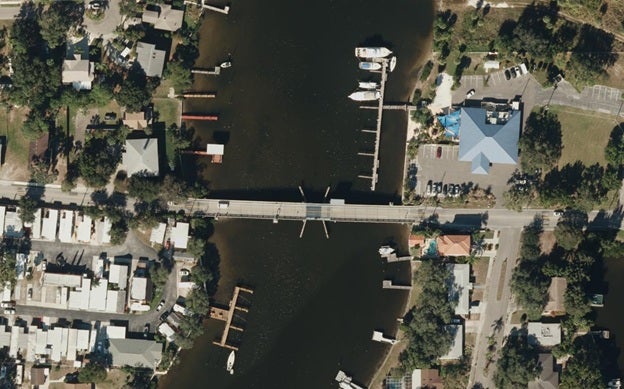
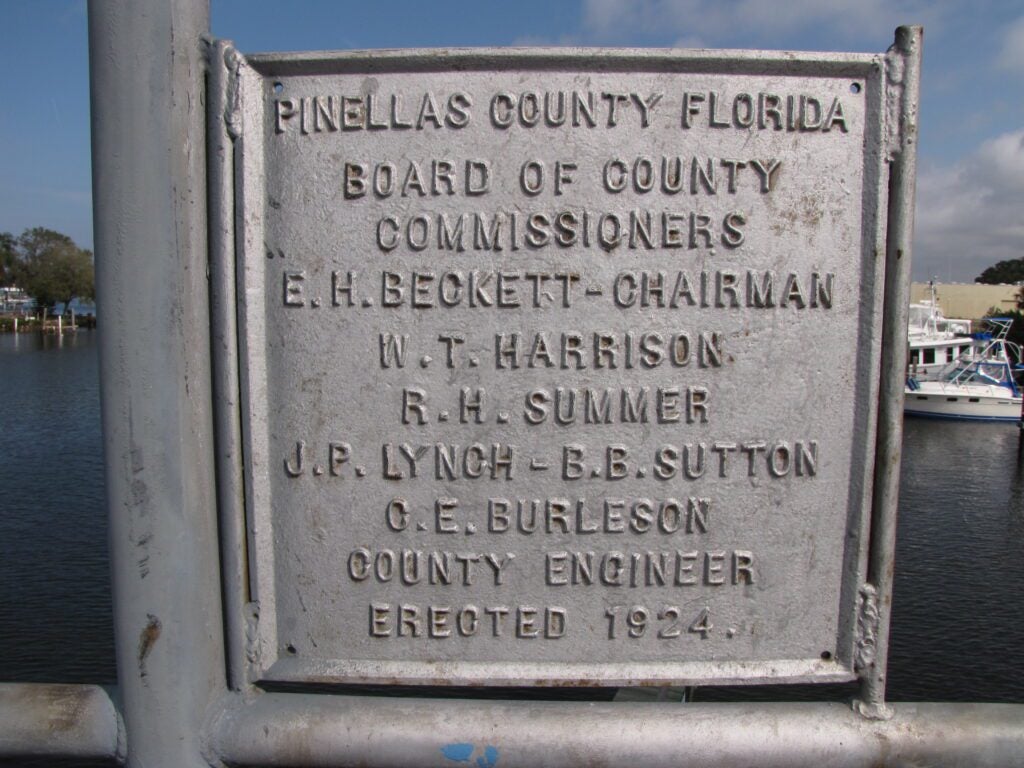
The Beckett Bridge was first constructed in 1924 and originally called the Chilito Street Bridge (n.a. 1948). It was designed by C.E. Burleson, a Pinellas County engineer, as a wooden bridge with a concrete pier and a steel drawbridge span. The Beckett Bridge is an example of a Scherzer rolling lift bascule bridge type, credited to William Scherzer, the Scherzer rolling lift bascule rolls along a curved track as it opens and closes, pulling itself out of the way of water traffic as it does so.
The length of the bascule span is approximately 40 feet. Bascule bridges are the most common type of moveable bridge, due to their ability to open quickly and the low energy requirement for operation. Single-leaf bascule bridges are less common than the double-leaf design, as they span smaller waterways. While bascule bridges are still commonly used today, the historic rolling lift bascule bridges are rare in the state of Florida. The Beckett Bridge (formerly the Chilito Street Bridge) remains one of only seven historical single-leaf bascule bridges in Florida, and is the only bascule bridge in Pinellas County that is not on the Intercoastal Waterway.
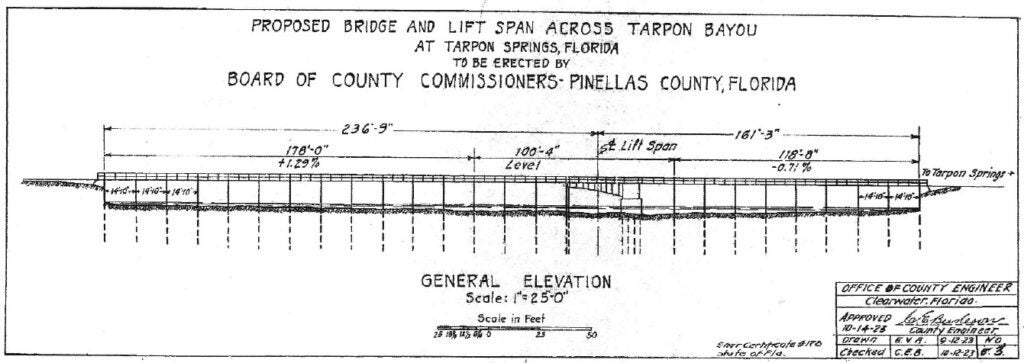
The function of the bridge was to connect east and west Tarpon Springs, carrying travelers over the Whitcomb Bayou. Before construction of the bridge, travelers could only reach the eastern side of Tarpon Springs from the west by taking either Meres Boulevard or Whitcomb Boulevard, located south of Whitcomb Bayou. The Beckett Bridge created a significantly shorter travel route to both the eastern residential areas and the Sunset Hills Country Club. Construction on the club began in 1924 and was completed in 1926. However, the club was forced to close at the onset of the Great Depression.
1948 | The Chilito Street Bridge becomes the Beckett Bridge
In 1948, the bridge was renamed “Beckett Bridge” after Edward H. Beckett, commending his 34 years of service as a County Commissioner at the time of his retirement. A native Floridian born in Clearwater in 1882, Beckett knew the district in which he was elected, having moved to Tarpon Springs in 1901. After opening his own clothing store, Beckett expanded his business to various branches in the state. Then in 1929, in addition to managing his 53-acre orange grove and his 8-acre truck farm, he opened a real estate and insurance business in Tarpon Springs.
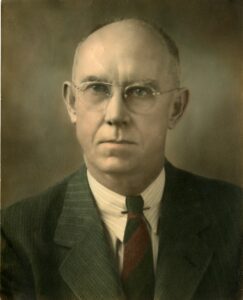
(Courtesy of Heritage Village Archives & Library)
Beckett served as city councilman in Tarpon Springs and as chief of police in Clearwater before being elected to the Pinellas County Board of County Commissioners in 1916. He was also active in supporting secession from Hillsborough County. For 32 years on the County Commission, 16 of those as chairman, he led the push for public parks and efficient water systems. Beckett often voted for new roads and for paving of those already constructed. Beckett died in 1962.
1955 – 1956 | Beckett Bridge Reconstruction
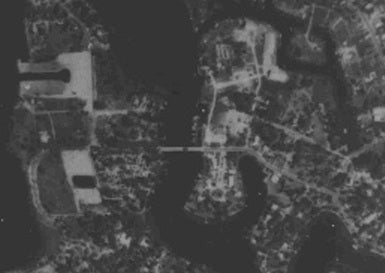
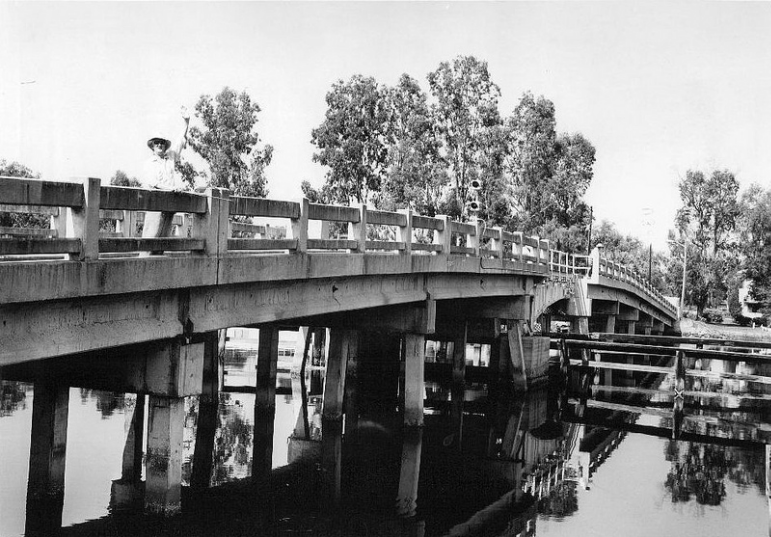
In 1955, Pinellas County deemed the Beckett Bridge unsafe and decided repairs to the original wooden structure would be wasteful. On February 21, 1955, the County Commission approved an $81,292 contract to W.L. Cobb Construction Company of Tampa, Florida to reconstruct the bridge. County engineer Leighton Heston recommended that steel and concrete slabs replace the wooden substructure and that the top roadway be cemented. The new structure utilized the original steel bascule, draw, and machinery for operation, though the remainder of the bridge employed concrete, spanning 350 feet. The date 1956 is inscribed in the concrete posts at each end of the bridge.
1996 | Beckett Bridge Repairs
The Beckett Bridge underwent repairs again in 1996. Twelve new steel pilings were added under the bridge. Many parts of the original 76-year-old steel bascule were so corroded they had to be replaced in kind, including the metal that held the center of the bridge steady, and electrical components, a concrete counterbalance to raise the drawbridge, and new sidewalks and galvanized pipe guardrails adjacent to the tender’s station were also installed on both sides of the steel bascule. The traffic and barrier gates were also added during the 1996 repairs.
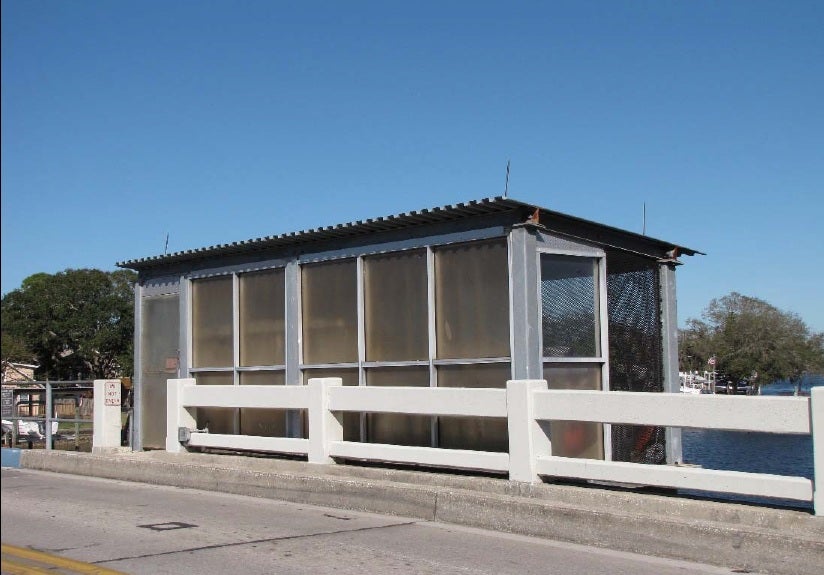
The 1996 repairs also included the addition of the bridge tender’s station. There are no full-time bridge tenders. A bridge tender is only present when required to open the drawbridge for the passage of a vessel. Adjacent to the tender’s station is a metal plaque signifying the original date of construction and engineer for the bridge.
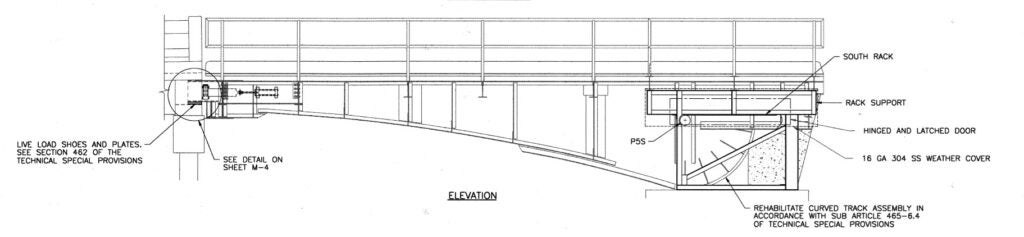
2011 | Additional Repairs
Repairs on the Beckett Bridge were performed in 2011 to correct issues with the operating machinery and the movable bridge span (the bascule leaf).