
Stormwater Management
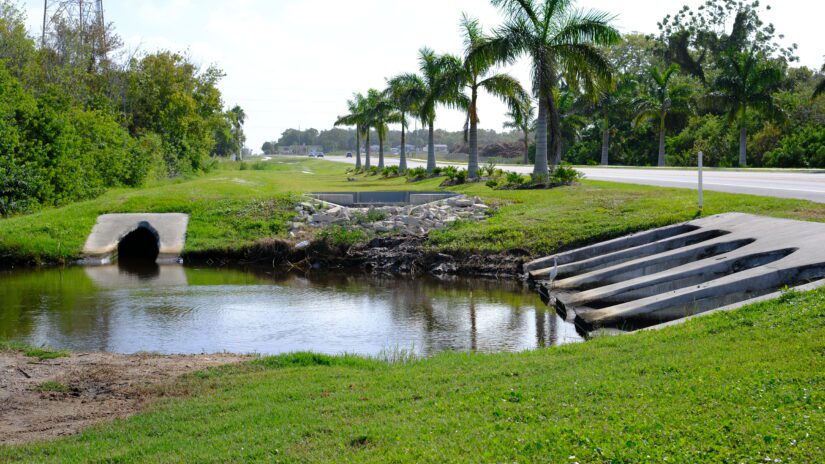
When rain lands on rooftops, streets and other impermeable surfaces, it typically flows into storm drains, swales or ditches located around the community to help prevent flooding of homes and businesses. This stormwater system is a tool for managing the runoff from the rainfall we receive here in Pinellas County.
Historically, the primary concern about stormwater was removing it from developed areas as quickly as possible for flood protection. Unfortunately, these practices led to drainage systems that did not consider other important factors such as water pollution and increased channel erosion.
By using a comprehensive system of ditches, swales, storm drains, pipes and detention/retention ponds, modern day stormwater systems help move water from developed areas to prevent flooding while using various methods to remove pollutants and return it back to the natural water cycle while mitigating harmful side effects.
Managing Stormwater: Retention & Detention
There are two basic techniques that most stormwater systems use, retention and detention.
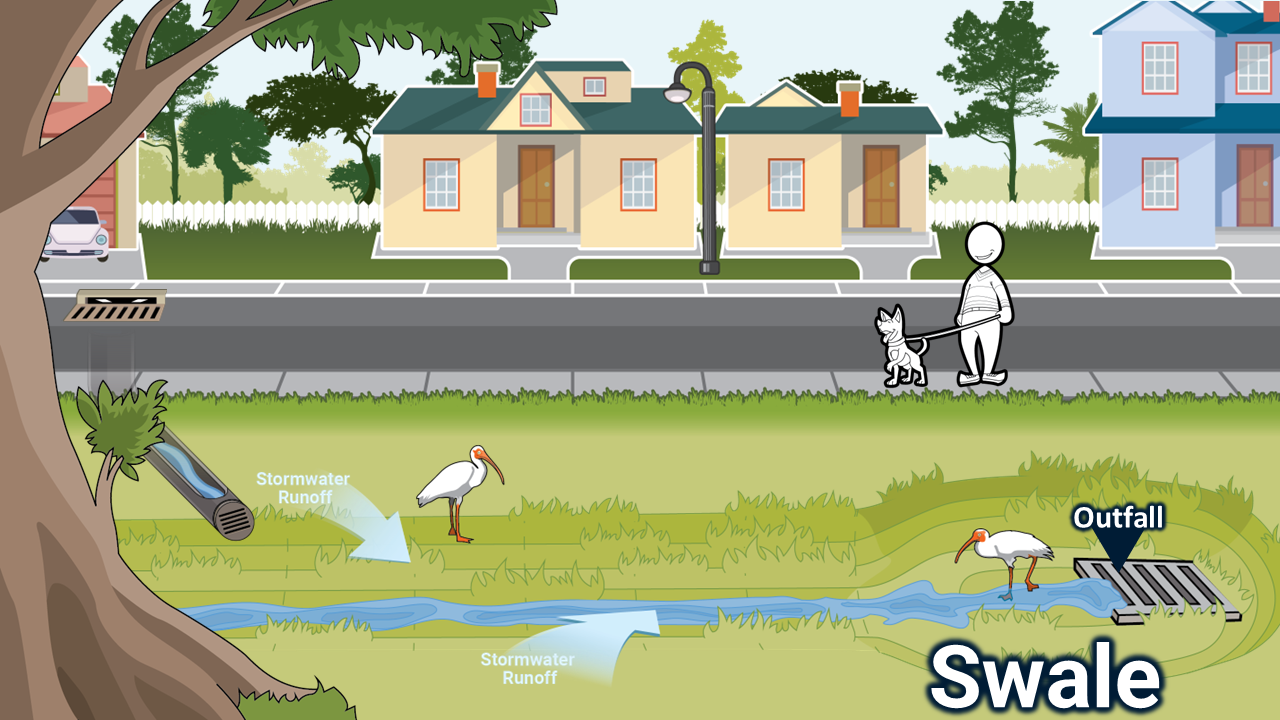
Detention ponds and swales are two of the most common forms of retention systems that you will find in Pinellas County. A swale is a linear retention system that is either constructed or natural-shaped to allow water to flow away from homes and businesses.
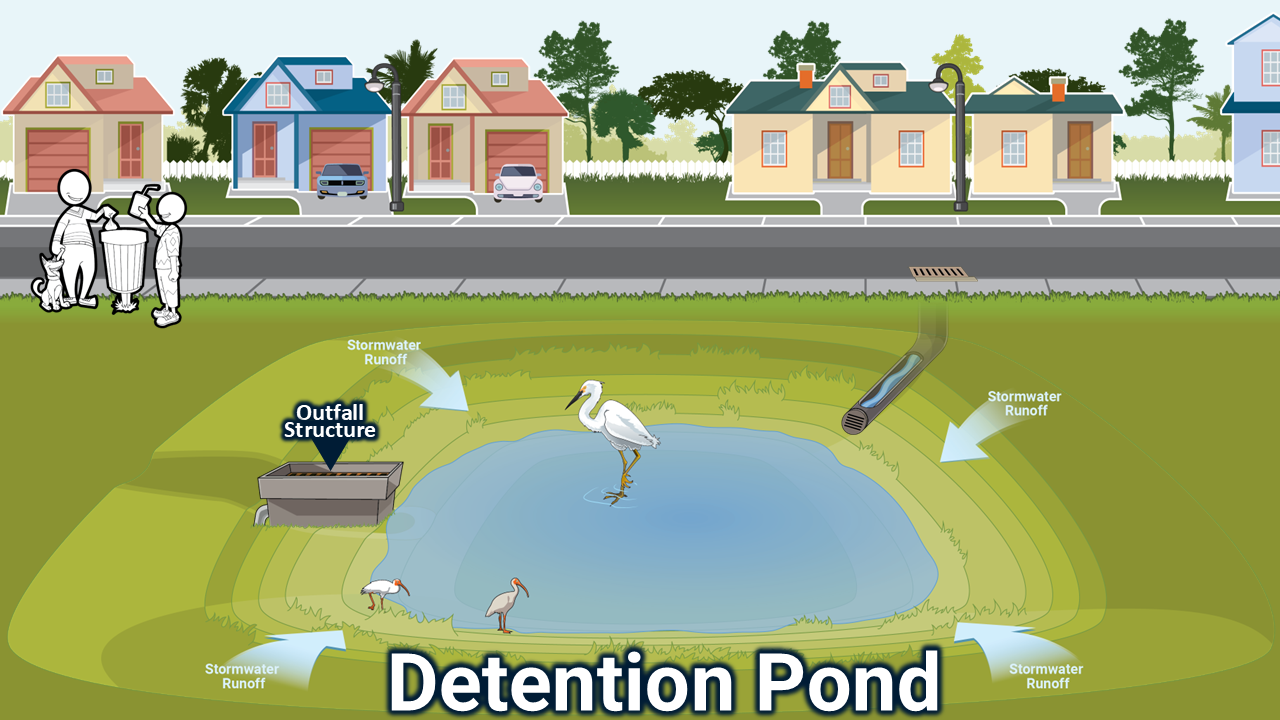
Swales also infiltrate water rather than just conveying it, providing water quality benefits. Swales hold water during and immediately after a storm, but they are generally dry. The same is true for detention ponds, which typically look like low-lying fields in dry conditions, but hold significant water during rain events.
Retention systems (wet ponds) are some of the most recognizable components of a stormwater system. A wet pond is designed to function more like a natural waterbody and holds water most of the time. This permanent pool is below the level of a manmade drain structure.
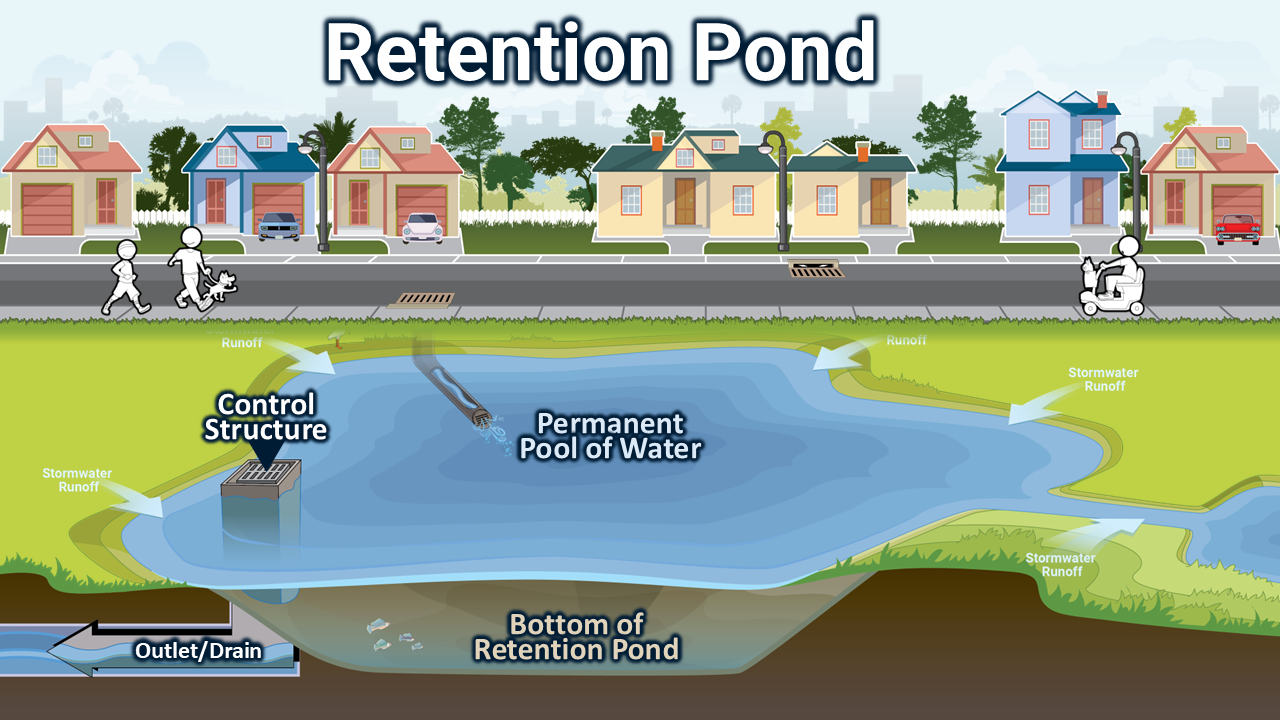
Water slowly drains from the wet pond through its outflow control structure and downstream to be discharged into a larger body of water. Sometimes aquatic vegetation is planted around the pond’s perimeter to help remove nutrients in stormwater runoff.
It’s important to remember, “Only Rain Down the Drain” when it comes to preventing flooding and waterway pollution. Learn more about how residents and management associations can help with stormwater runoff.
Stormwater System Design
When the frequency and intensity of weather events vary drastically, how do engineers design stormwater assets that will weather the storm? In Florida, and many other states, stormwater systems are designed and sized based on an event termed the “design storm,” which is a theoretical event.
According to the Southwest Florida Water Management District, the average annual rainfall for Pinellas County from the past 25 years is 51.57 inches, with nearly 60 percent of it received from June through September. Weather patterns like El Nino and La Nina and the number of tropical storms that bring rain to the state are some of the major factors that affect the amount of rainfall that we receive.
Pinellas County designs most of its stormwater systems in the unincorporated area to manage a 25-year/24-hour design storm. Based on precipitation frequency estimates from the National Oceanic and Atmospheric Administration (NOAA) for Pinellas County, that means that a component of the system that is built to 25-year/24-hour standards can handle approximately 9 inches of rain in a 24-hour period.
Severe weather, from highly localized afternoon thunderstorms to hurricanes that cover the state, can bring significantly more rainfall in a shorter period of time, which can cause overflows in the stormwater system. Extreme high tides and storm surge in the Gulf can combine with heavy rainfall to increase the degree of flooding, particularly in coastal areas.
This compound flooding happens when different flood sources combine to make flooding worse. For example, if high water levels in the Gulf and bays raise the water surface, the stormwater drainage outfalls can go underwater. This prevents the drainage system from releasing rainwater, so runoff backs up and causes more severe flooding inland.
The “100-Year Storm” Myth
The 100-year rainfall amount is the depth of precipitation that has a 1% chance of being equaled or exceeded in any given year. When meteorologists and weather experts refer to these types of events (50-year/100-year/500-year storms, etc.), they are talking about statistics and probabilities.
For example, there is a 1% chance of a “100-year storm” happening every year. It does not mean that if or when you experience a 100-year storm event, you won’t have to worry about flooding again for the next 99 years.
If your property is located in the 100-year floodplain, there is a 1% chance it will flood each year, but if your home is below the base flood elevation, there is a 26% chance it will flood at least once over the course of a 30-year mortgage.
Stormwater System Ownership
In Florida, the responsibility for permitting most stormwater systems rests with the water management districts. For Pinellas County, that is the Southwest Florida Water Management District. After the construction of permitted systems in residential and commercial areas, the permit and the legal responsibility for maintaining these systems are typically transferred on to a homeowner’s association, commercial company or similar entity.
Once transferred, the maintenance of the system becomes the responsibility of the owning association or individual. The owner is responsible for the labor and expense of keeping the system functional. This responsibility applies to every homeowner and property owner in the neighborhood, even if they do not live immediately adjacent to a stormwater system, as everyone’s runoff was designed to flow into the system.
Stormwater System Funding
Funding for stormwater Capital Improvement Plan projects comes from several sources, including local (Penny for Pinellas), state grants (SWFWMD Cooperative Funding Initiative (CFI), Resilient Florida, state appropriations), and federal grants (Community Development Block Grants, FEMA, NOAA, and others).
The County’s Surface Water Assessment fee is used for operation and maintenance of county-owned stormwater assets. Funds for Watershed Management Plans typically come from the Surface Water Assessment fee, SWFWMD’s CFI, and municipal partners.