
Customary Use
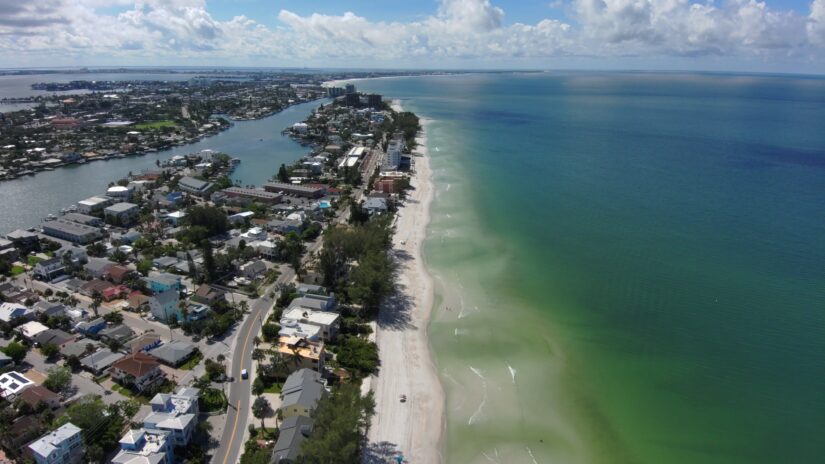
Visit us at the Redington Shores picnic
Bring your documentation and stories of visiting the beaches of Indian Shores and Redington Shores to the Redington Shores Annual Town Picnic.
Saturday, Oct. 17, 2026, 1 p.m. – 5 p.m.
Constitution Park
18214 Gulf Blvd, Redington Shores
Download an affidavit
Pinellas County signed a 2026 beach nourishment project coordination agreement with the U.S. Army Corps of Engineers (USACE), resolving longstanding concerns from the County and beachfront property owners. A key change now allows communities to adopt customary use ordinances instead of requiring perpetual public access and use easements—an option previously not authorized by USACE.
Indian Rocks Beach adopted customary use in 2018. Indian Shores and Redington Shores are considering the same.
Why Customary Use Matters in Indian Shores & Redington Shores
Customary use formally recognizes the public’s long history of enjoying local beaches for walking, sunbathing, swimming, fishing, and other recreational activities. Adopting these ordinances:
- Protects the historical public access and use of the beach.
- Meets USACE requirements for federal beach nourishment funding.
- Ensures the entire Sand Key nourishment project remains eligible; one segment failing to qualify puts the whole project at risk.
The updated agreement provides an option for shorter-term construction easements in conjunction with local ordinances, removing the need for easements to explicitly include “public access and use.”
How You Can Help
To adopt customary use, communities must document the long-standing history of public beach use. We’re asking residents, visitors, and businesses to share historical materials showing public use of the beaches in Indian Shores and Redington Shores.
Helpful historical documentation includes:
- Photographs or home video of people using the beach, public events, or beach maintenance
- News articles
- Personal stories or family history (with affidavit)
- Brochures promoting the beaches
Providing Evidence of Customary Use
- Use the Customary Use Reporter Map below to drop a pin, upload photos, and add commentary.
- Submit written or recorded oral history.
- Provide affidavits (ask about free notary and recording resources).
- Email beachhistory@pinellas.gov with support documentation or for assistance with scanning original records.
Customary Use Reporter Map
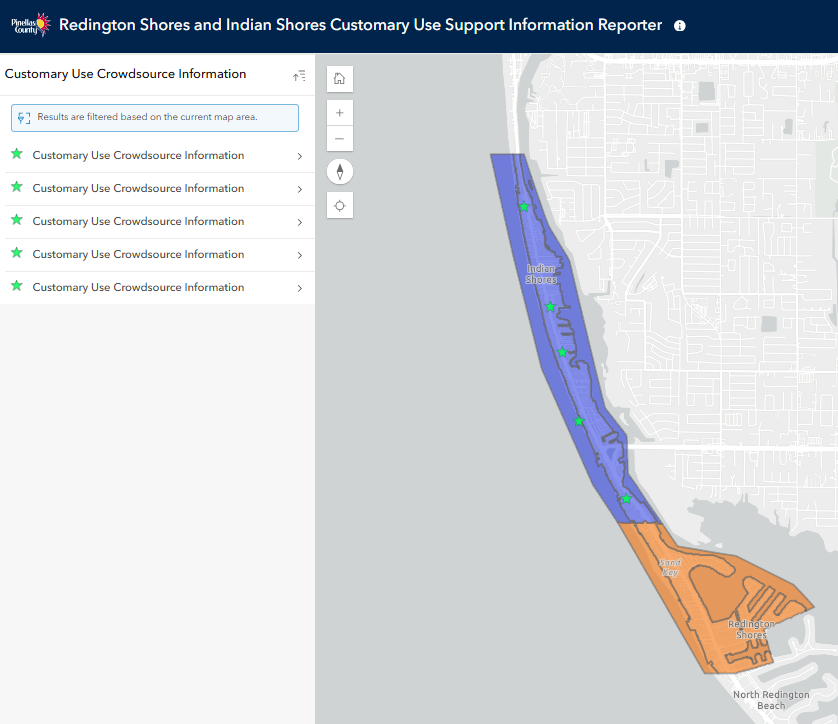
- Click the map above. Once there, click the “Proceed to Reporter” button.
- Click the “Start a Submission” button at the bottom left of the screen.
- Drop a point on the map to show where your information applies.
- Add details and upload any attachments.
- Click the “Submit” button to receive confirmation.
Frequently Asked Questions
What is a customary use ordinance?
A customary use ordinance formally recognizes the public’s long history of enjoying spaces, such as our local beaches, for walking, sunbathing, swimming, fishing, and other recreational activities.
How are customary use ordinances related to beach nourishment?
On May 29, 2026, Pinellas County signed an amendment to the beach nourishment project coordination agreement with the U.S. Army Corps of Engineers (USACE), resolving some longstanding concerns from the County and beachfront property owners. The amended agreement allows for shorter-term construction easements and removes the need for easements to explicitly include “public access and use” language, adding the ability to use local ordinances.
Which communities are currently involved?
Indian Rocks Beach approved a customary use ordinance in 2018. Indian Shores and Redington Shores are considering the same.
Why is Pinellas County collecting evidence of customary use?
Pinellas County is assisting the towns of Indian Shores and Redington Shores in the data collection phase of historical use documentation to provide a resource for the towns that supports collecting photos and videos that show what parts of the beach the public has used through the years.
What types of evidence can I submit?
- Family photographs or videos
- Historical postcards and brochures showing beach activities
- Newspaper articles or publications
- Written personal recollections
- Recorded oral histories
- Other documents demonstrating long-term public use of the beach
How do I submit evidence?
You can submit information through the Customary Use Reporter Map. Users can drop a pin on the map, provide details about the location, upload supporting materials, and submit their information electronically.
What if I only have printed photos, paper documents or video on tape?
Pinellas County can assist with scanning original records and documents. Residents may email beachhistory@pinellas.gov for assistance if their evidence is not already in a digital format.
Can I submit personal memories or stories?
Yes. We’re asking for firsthand accounts from residents, visitors, business owners, and others with knowledge of historic beach use. Written statements and recorded oral histories with affidavits will be accepted.
How does customary use relate to beach nourishment projects?
Federal beach nourishment projects often require public access considerations. Documenting customary use may help communities satisfy requirements needed to participate in future beach nourishment projects that receive federal cost-share benefits.
Who can I contact for assistance?
For questions, help with submissions, or assistance scanning documents, you can email beachhistory@pinellas.gov with support documentation or for assistance with scanning original records. For specific questions about customary use or local ordinances, please contact the municipality where you own property.
Under Florida law, e-mail addresses are public records. If you do not want your e-mail address released in response to a public records request, do not send electronic mail to this entity. Instead, contact this office by phone or in writing.
Persons with disabilities may contact our Office of Human Rights by calling (727) 464-4880 or by email for additional assistance with these documents.