
Mosquito-transmitted Dengue
What you need to know
Current Status
Pinellas County is under a mosquito-borne illness alert and a state of local emergency for dengue. Pinellas County Mosquito Control has increased surveillance, inspections and treatments to limit the spread of the virus.
As of the Florida Department of Health’s (FDOH) most recent report on Oct. 15, the Tampa Bay area has 351 confirmed cases of locally acquired dengue, including 37 in Pinellas County.
What is dengue?
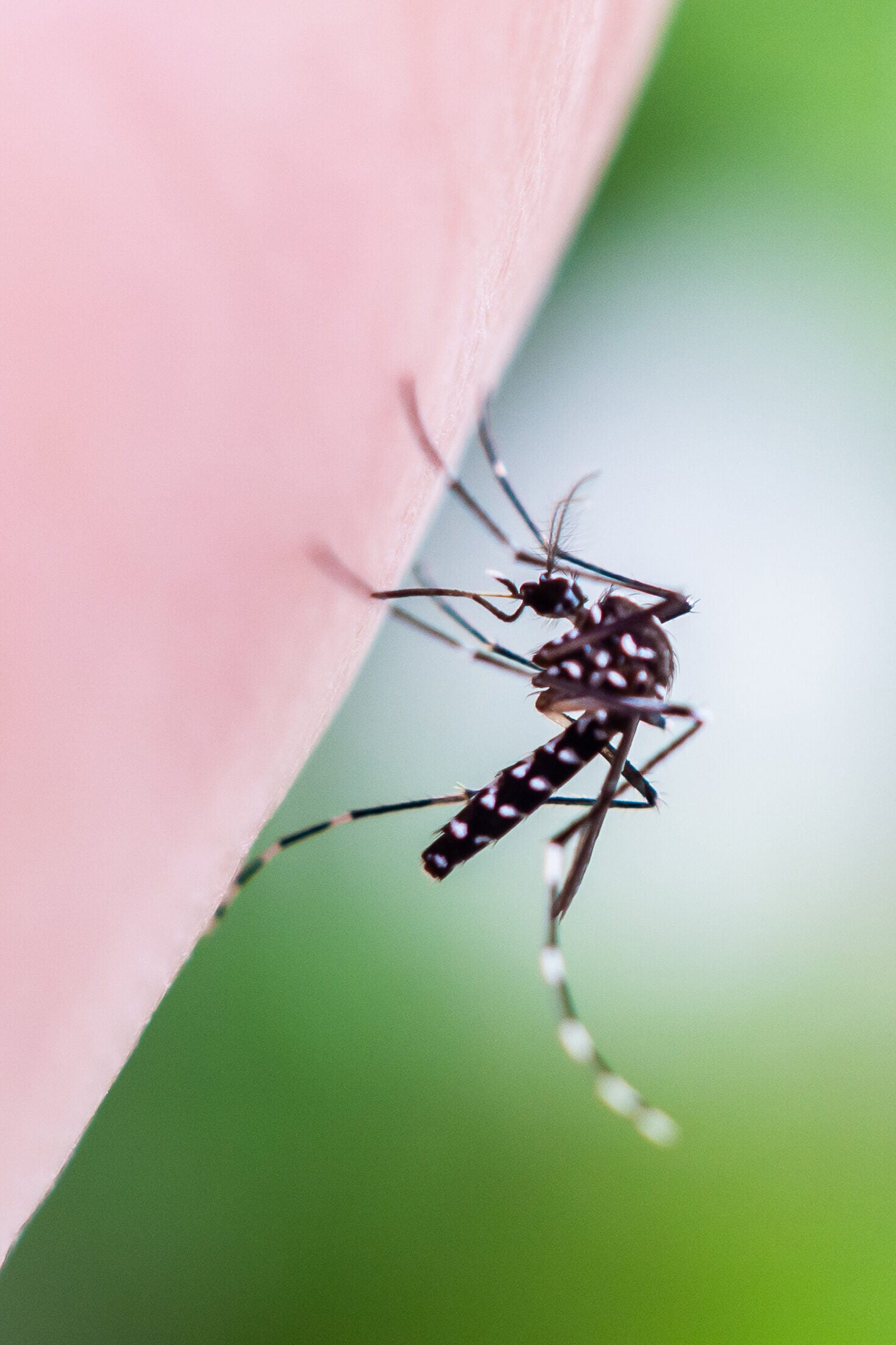
Dengue is a virus spread through the bite of an infected Aedes aegypti or Aedes albopictus mosquito. You can learn more about the virus from FDOH.
The Aedes aegypti and Aedes albopictus mosquitoes thrive in areas near homes and businesses and lay their eggs in containers that hold water like tires, buckets, plant dishes, wagons, trash cans and more.
Unlike many mosquitoes you may associate with being active in the evening, the mosquitoes that spread dengue can also bite during the day and are not found breeding in typical locations like ditches, canals, ponds or swamps.
It doesn’t take much water. These mosquitoes breed in small containers around your home, even those holding as little as a bottle cap of water.
What Pinellas County is doing
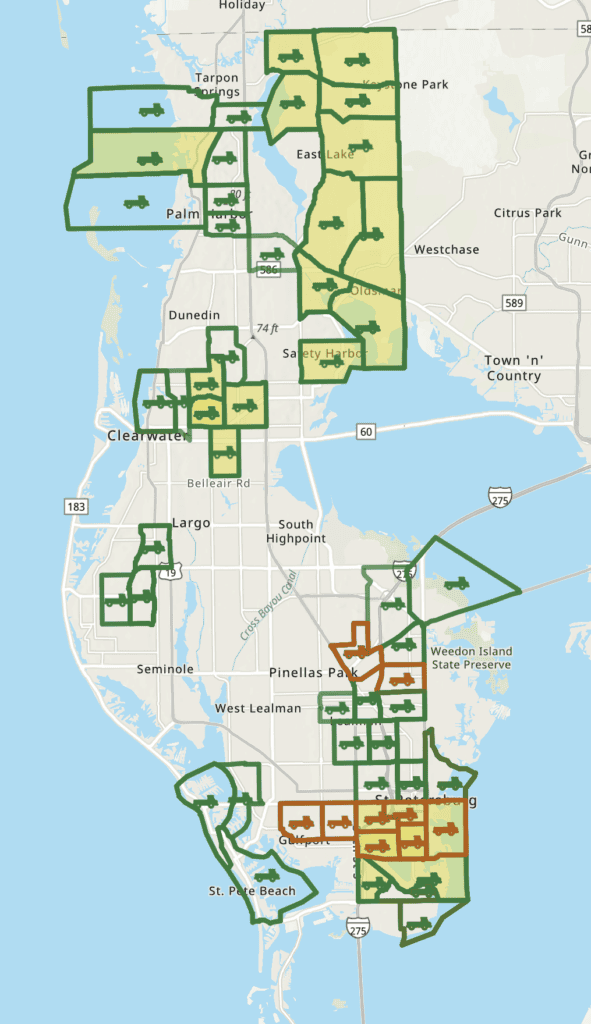
Pinellas County Mosquito Control is expanding its efforts to reduce mosquito populations through increased treatments, ongoing partnerships and new contractors. We are working closely with the Florida Department of Health in Pinellas to monitor mosquito-borne illnesses and respond where needed.
View our planned and completed treatments on our online treatment map.
Aerial Treatments
Pinellas County Mosquito Control is partnering with Lee County Mosquito Control to conduct aerial mosquito larvae treatments in parts of St. Petersburg and Clearwater to reduce the population of mosquitoes capable of spreading dengue.
The aerial treatment will be a fine mist of Bacillus thuringiensis israelensis (Bti) sprayed from low-flying helicopters in designated areas. The treatments are planned between 9 a.m. and 3 p.m., when it’s easiest for people to go indoors, although Bti is not harmful to humans, pets or pollinators.
The helicopters will be noisy when flying at low altitudes.
What are the helicopters spraying and is it safe for people?
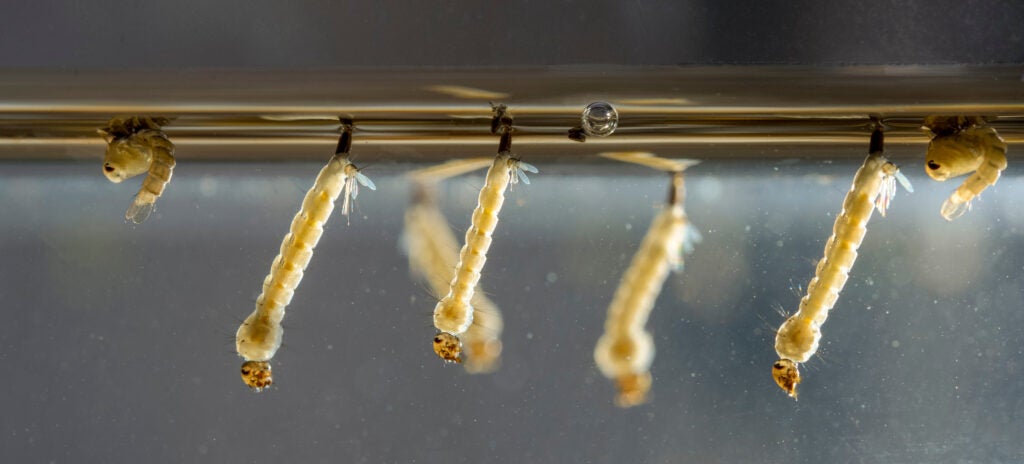
The helicopters are spraying Bti, a natural bacteria found in soil that targets mosquito larvae and black flies. It will be mixed with water to create the treatment. Mosquitoes have a unique gut pH that causes them to release a toxin once they ingest the Bti. Because it only affects mosquitoes, Bti is safe for humans, pets and other pollinators when used properly.
What do I do if I come in contact with Bti?
Because Bti is safe for people, there are no special steps for you to take should it contact you. You can simply follow basic hygiene to remove it.
What should I do if Bti gets on my vehicle?
You may notice small droplets on the outside of your vehicle following aerial larvae treatments. Small droplets can be washed away with water. If the product remains for an extended period, additional scrubbing may be needed.
Why does the helicopter fly so low? Why does it fly in that pattern?
Flying at treetop level helps get the treatment through the vegetation and into standing water below, where mosquito larvae are developing. The helicopter makes tight turns like how you mow the lawn to best cover an entire area. You can see the patterns and learn more about the flight patterns in this video from Lee County’s Mosquito Control.
Why fly during the day?
Because aerial larvae treatments require low flying, it is safer for crews to fly in congested areas like Pinellas County during the day to see any potential obstacles.
Why is Mosquito Control using helicopters?
As cases of dengue fever continue to increase, more areas need treatment. Mosquito Control’s typical larvae treatments by truck cannot efficiently cover all areas of need. Aerial larvae treatments are very similar to trucks but more quickly cover more area. Spraying from above also allows treatment to fall into more hard-to-reach areas like alleys our trucks cannot access.
How do I know if the helicopter is going to treat in my neighborhood?
To receive text or email notifications of upcoming aerial treatments in your area, you can sign up for Alert Pinellas at Pinellas.gov/Alert-Pinellas.
Truck Treatments
Mosquito Control is doing two forms of truck treatments to combat mosquitoes – one targeting adult mosquitoes and another targeting mosquito larvae. With the current viral activity, truck fogging treatments may start as early as 11 p.m.
Mosquito Control contracted additional trucks with their vendor, Clarke Mosquito Services, to assist with overnight treatments. These trucks will have both Pinellas County and Clarke branding and may possess out-of-state license plates.
Door-to-Door Inspections
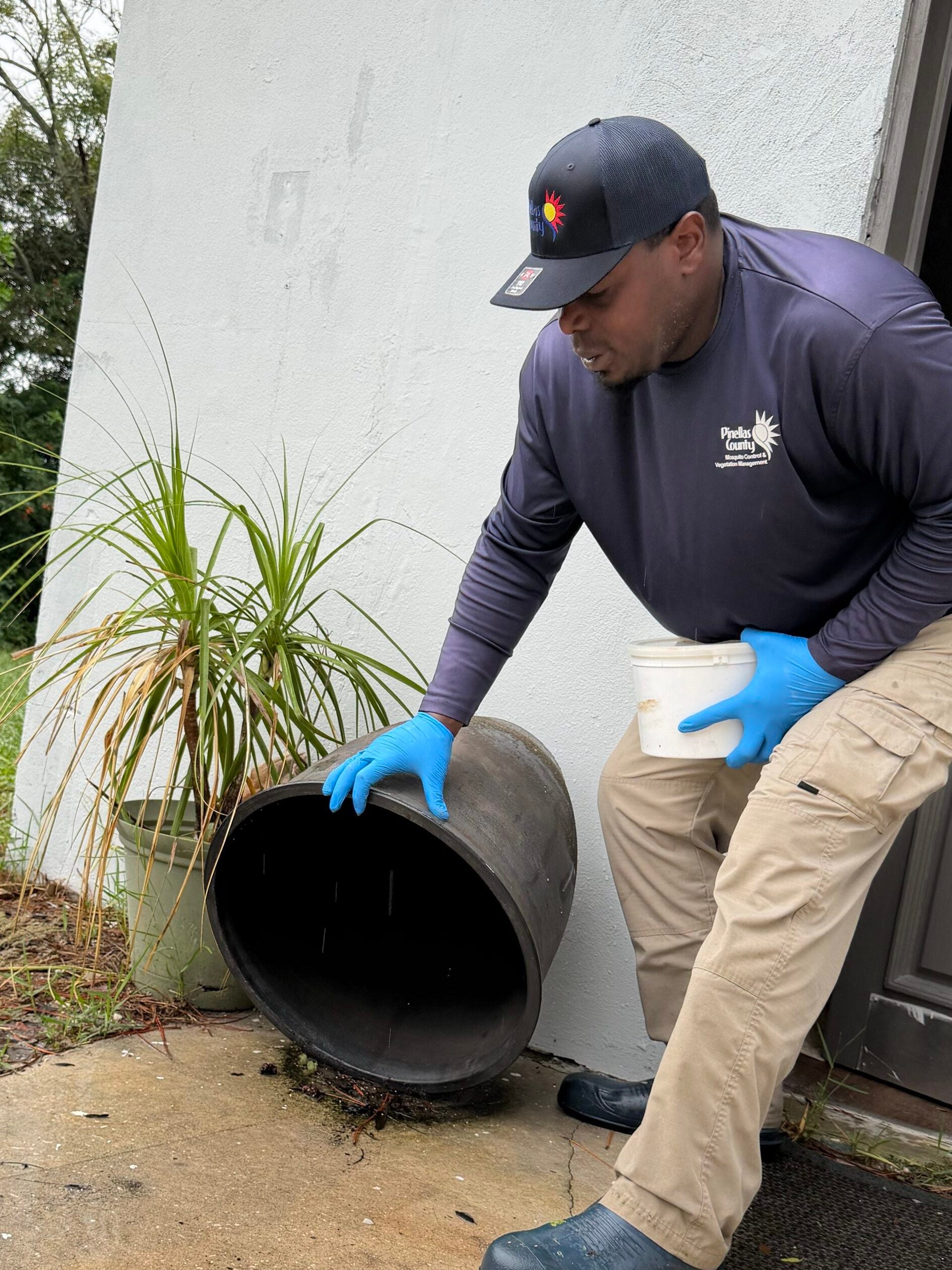
In areas of concern, Pinellas County crews are going door-to-door to offer residents help with dumping or treating standing water with the residents’ permission. Staff will be wearing a Pinellas County uniform and an ID badge. Residents are encouraged to allow trained crews access to help protect their families and communities.
If a Mosquito Control technician visits your property, allowing technicians to inspect your yard can help them find and eliminate hidden mosquito breeding sites. Click here to see an example.
Service Requests
Due to the high viral activity, Pinellas County Mosquito Control cannot provide services for routine mosquito complaints at this time.
Tire Disposal Fee Waiver
In an effort to prevent the spread of dengue, Pinellas County Solid Waste will waive the tire disposal fee for tires from homes from Sept. 28, 2026, to Oct. 30, 2026. Residents are encouraged to bring tires for disposal under the following conditions:
- Must be a resident of Pinellas County (Driver’s License required for verification)
- No tires from businesses
- Tires will be accepted during normal business hours
- Tires shall be brought as a segregated load and not mixed with other trash or waste
- No more than four tires per load
- Tires may be on a rim/wheel
- Tire size shall be less than 36” diameter
Protect yourself: Dump. Dress. Defend.
Residents should take precautions to prevent mosquito bites and remove standing water around their homes and businesses.
DUMP
Dump standing water at least once a week.
Check buckets, toys, plant saucers, tires, pet dishes, plants like bromeliads and other potential containers around your home or business.
Empty water, scrub containers when practical and turn them over, cover them or store them where they cannot collect rainwater. If you have a container that cannot be dumped, you can treat it with Bti (Bacillus thuringiensis israelensis). The most common forms are mosquito bits and mosquito dunks that you can find online or at your local hardware store.
The mosquitoes that can spread dengue often breed in containers on private property. Removing those breeding sites is one of the most important things residents can do to reduce mosquitoes around their homes.
DRESS
Cover up when outside both day and night.
Wear light-colored long sleeves and pants as well as socks and closed-toe shoes when practical.
DEFEND

Use an EPA-registered insect repellent, such as:
- DEET
- Picaridin
- IR3535
- Oil of Lemon Eucalyptus.
Placing a bottle of repellent near doorways, pet leashes or other items you can commonly bring with you outside to make applying easier to remember.
Dengue is a regional concern
Dengue does not stop at County lines.
The mosquitoes that transmit dengue don’t travel very far from their breeding location, most times only within a few houses, but people travel throughout the Tampa Bay region all day, every day. The virus can spread when a mosquito becomes infected by biting a person who has dengue and can later spread the virus to other people.
That means increases in dengue cases elsewhere in the Tampa Bay area can increase the potential for additional local transmission in Pinellas County.
Additional resources
Pinellas County
- Mosquito Control
- Mosquito Control Prevention and Protection Tips
- Stop Raising Mosquitoes Around Your Home