
Frequently Asked Questions About Disaster Preparedness and Recovery
What do I do to prepare for a disaster?
There are three basic steps to take to prepare for a disaster.
Know Your risk: Look up your hurricane evacuation zone and FEMA flood zone.
Make a plan: Include all of your family members, others in your care, pets, home, business, mobile home, boat and any other considerations that you may have.
Stay informed: Sign up for Alert Pinellas emergency notifications. Download the Hurricane Guide (PDF) in English, Spanish or Vietnamese. Download the Ready Pinellas emergency planning app on the App Store or Google Play (Information available in English and Spanish).
For more information: disaster.pinellas.gov
What items do I need in my emergency supply kit?
Be prepared with enough supplies for at least one week. Basic supplies include important documents, medicine, water, non-perishable food, toilet paper, diapers, non-electric can opener, flashlight, emergency weather radio, extra batteries and a first-aid kit. See a list of recommended items for your emergency supply kit.
Can I get extra prescription medication right before a storm?
According to Florida law, if the governor issues an emergency order or proclamation of a state of emergency, the pharmacist may dispense up to a 30-day supply in the areas or counties affected by the order or proclamation, provided that:
a. The prescription is not for a medicinal drug listed in Schedule II appearing in chapter 893.
b. The medication is essential to the maintenance of life or to the continuation of therapy in a chronic condition.
c. In the pharmacist’s professional judgment, the interruption of therapy might reasonably produce undesirable health consequences or may cause physical or mental discomfort. View Florida Statute addressing emergency prescription refills.
What’s the difference between an evacuation zone and a FEMA flood zone?
Evacuation zones are based on storm surge risk. Storm surge is when water from a hurricane is rapidly pushed onto land and can range from a few feet to over 20 feet. Look up your evacuation zone. You may also call (727) 464-3800 for assistance with looking up your zone.
FEMA flood zones are different. They are set by FEMA and include your risk of flooding from rain, rivers and other water bodies. This determines your flood insurance rate. Look up your FEMA flood zone.
Why should people evacuate for hurricanes?
Evacuations are primarily ordered to protect people from storm surge. There are additional hazards that need to be considered, including rainfall and winds. If you live in an area that is prone to flooding, you should assess your risk from the flooding that occurs with heavy rain. The risk of strong winds is another consideration. Know if your home is strong enough to stay in. Consider:
- The year it was built.
- The materials it was built with.
- The year the roof was replaced.
- Whether you have hurricane-impact windows and/or coverings for windows and doors.
All mobile homes are included in any evacuation order, no matter where in the county they are located, because of their vulnerability to wind.
See details about your property on the Pinellas County Property Appraiser website.
Find tips on how you can protect your home from the Federal Alliance for Safe Homes (FLASH).
How will the community know when it’s time to evacuate?
The County will announce when evacuations should start and which areas need to evacuate through notifications on Alert Pinellas and Ready Pinellas, on the County website, and from trusted media sources. Don’t wait until the last minute. You should be in a safe place before the arrival of storm-force winds. Remember that evacuations may take longer than you expect. Buses used for evacuations will stop running several hours before the dangerous winds start, and emergency vehicles will stop running when conditions are no longer safe due to wind.
What are my evacuation options?
If you evacuate, you have several options.
Stay in the County — You can stay in the county in a hotel, other lodging, or with friends or family. Be sure that you evacuate to an area that is not being ordered to evacuate. If you need somewhere safe to stay, you can go to one of Pinellas County’s public shelters. Not all shelters open for every storm, so be sure to check which ones are open before you go. Get more information to be prepared and to find the list of shelters.
Leave the area — If you choose to leave the area, leave early enough to avoid traffic. Check 511 or download the app for traffic updates. Be sure you continue to monitor the storm to ensure it won’t impact the area you are going to. We recommend you travel tens of miles, not hundreds of miles.
What kinds of shelters are there?
Pinellas County has three types of public shelters: general population, pet-friendly and special needs. They are all outside of the evacuation zones. They provide basic food and water, but special dietary foods are not provided. You can bring your own food. Space is limited, so bring a twin-sized air mattress, a cooler and a personal bag. Don’t forget medical items. See the list of recommended items to include in your emergency supply kit.
Where can I bring my pet?
You can reach out to friends who live in a non-evacuation area to see if they can take your pets during the storm.
- Look for pet-friendly accommodations. Ask your veterinarian if they board pets during an emergency or if they can recommend a boarding facility out of harm’s way.
- Pet-friendly shelters offer a safe option to evacuate with your pets. If you are ordered to evacuate, never stay at your home because of your pets and never leave a pet alone at home.
Can I go to a special needs shelter?
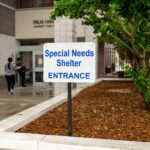
If you are dependent on oxygen or electricity for medical equipment, or need minimal medical assistance, you may be eligible to stay at a special needs shelter. Pets are not permitted at these shelters, and if you do not have someone to care for them, Pinellas County Animal Services will care for them and return them to you after you return home. Service animals are welcome at all public shelters. Get more information and register for special needs shelters and check the list of recommended items to include in your emergency supply kit. You can also call (727) 464-3800 for assistance registering for special needs shelter.
Are there times I would evacuate to a hospital?
Based on your answers to the questions on the Special Needs Evacuation Program registration, you will be recommended to a shelter type that can support your needs. This may be a general population shelter, pet-friendly shelter, special needs shelter, or a hospital or medically managed facility. Get more information and register for special needs shelters.
What if I don’t have transportation to get to a shelter?
PSTA will run buses to shelters once an evacuation order is issued. These rides are free. Ride share services such as Uber and Lyft may offer free rides as well. If you need specialized transportation assistance, the Special Needs Evacuation Program can assist. Those who need this service must register for the Special Needs Evacuation Program.
How do I register for the Special Needs Evacuation Program?
You can register for the special needs program online, request that a form be mailed to you, call (727) 464-3800, or ask your home healthcare provider to assist you.
What services are available for individuals with disabilities?
Deaf and hard-of-hearing individuals can text 9-1-1 in an emergency.
For information, Live Chat is available on every webpage on the Pinellas County website.
Everyone is welcome at any public emergency shelter. If an individual needs additional assistance with activities of daily living, they should sign up for the Special Needs Evacuation Program. Service animals are welcome at all shelters.
Pinellas County works closely with the Disability Achievement Center, which provides free emergency services that include provision or repairs to durable medical equipment (wheelchairs, walkers, Hoyer lifts, etc.), assistive technology (alerting equipment for the deaf/hard of hearing, installation of grab bars and ramps), incontinence supplies and nutritional drinks, and disaster case management (FEMA applications and advocacy). To access these services, call or text (727) 539-7550 or email info@mydacil.org.
If I live on a barrier island and evacuate, when will I be allowed back to my home or business?
Law enforcement will restrict access to the barrier islands after a hurricane until it is safe. Then, access may be limited to barrier island residents and businesses with an Emergency Access Permit. You can get more information from your municipality.
What should I do during a storm?
Once the winds start blowing, everyone should shelter in place as the hurricane or tropical storm passes by. No matter where you are, it is not safe to go outside.
Wait until the storm has passed to tend to any damages.
Keep exterior doors and windows closed.
Identify and stay in a safe room: an interior room, closet or hallways away from windows. Close interior doors. Lie on the floor under a table or other sturdy object, or in a bathtub if you cannot make it to a safe room. Curl up and cover your head with a mattress, helmet or other protective item.
If floodwater is rising in your home, stay inside and try to get up as high as possible within your home — on top of a counter, to the second floor or into the attic, if necessary.
Before power goes out, call an emergency contact to let them know where you are so that responders can locate you after the storm.
Shut off water, gas service and electricity if it is safe to do so.
What should I do after a hurricane?
In the days following a hurricane, you may be on your own. Emergency responders may not be able to access all areas of the county immediately. Traffic signs and signals may be down and driving on roads may be very dangerous.
- Stay home or in the shelter where you are staying.
- Get information from the texts sent out via Alert Pinellas.
- Keep kids and pets with you.
- Keep your power off if flooding occurred until an electrician can check on it.
- Be sure that you are using non-perishable food and assume there is a boil water notice until you hear otherwise.
- Take photos of damage to your home and any high water marks from flooding, and contact your insurance agent as soon as possible.
- Make sure contractors you hire are licensed.
- Avoid flooded areas and standing water. Do not wade through flood water, which could have live power lines, sewage, wildlife or dangerous objects in it.
How do I report damage after a storm?
After a hurricane or tropical storm, you can report damage to your home or business at disaster.pinellas.gov or using the Ready Pinellas app. You can report issues such as downed traffic lights, broken traffic signs or other damage to public infrastructure through SeeClickFix.
What is “Substantial Damage” (the “50% rule”)?
If the cost to repair a home is 49% (50% in some areas) or more of its value without the land, the home is considered Substantially Damaged and cannot be repaired without bringing it into compliance with the current floodplain codes (e.g. elevating or replacing it). This is a process that the federal government requires all cities and counties that participate in the National Flood Insurance Program to follow. Learn more.
What should I do if my home was flooded by a storm?
If your home had water over your electrical outlets:
- Turn off your electrical breaker if it’s safe to do so.
- Contact your insurance agency and file your claim as soon as possible.
- Take photos/video of any damage for insurance and FEMA.
- Photograph high water marks on the outside and inside of your home, ideally with a tape measure showing the height.
- Start a list of all damaged belongings.
- Remove wet items immediately to prevent mold.
What should I do with debris after a hurricane?
Place debris in three piles in the right-of-way: 1. Vegetation, 2. Appliances, and 3. Demolition (includes furniture and fencing).
- Use transparent bags for demolition debris only. Other debris should not be bagged.
- No black trash bags!
- Place piles away from drains, trees, mailboxes, hydrants and utility poles/meters.
To check which types of debris will be picked up, check with your city or visit disaster.pinellas.gov after the storm.
Is there a phone number that I can call to talk to someone?

When a hurricane is approaching, the County will open the County Information Center, which will remain open for questions until after the threat has passed. The phone number is (727) 464-4333. There is also a Live Chat feature available on any page on the Pinellas County website, Pinellas.gov, which may be of assistance to those who are deaf or hard of hearing.
What should I know about generator safety?
Generators produce carbon monoxide (CO), a colorless, odorless and tasteless gas. It is deadly. Carefully place generators so the exhaust fumes can’t enter the home through windows, doors or other openings in your home.
Install carbon monoxide detectors in your home to protect you in case fumes do escape.
Generators should be kept in well-ventilated locations outside, away from all doors, windows and vent openings.
How do I find a licensed contractor?
In a State of Emergency, verify the license status of state-certified contractors online. A list of PCCLB-licensed, qualified and insured contractors can be found online using the Contractor Search feature.
- Watch out for contractors who take deposits and do little or no work.
- Avoid dealing with anyone soliciting work door to door.
- Take the time to check if a contractor is licensed and insured.
- Following a disaster, be wary of scams, donating to charities, price gouging and homeowner resources.
Find out how to protect yourself. To report suspected fraud, call (727) 464-6200.
How do I access assistance through the Federal Emergency Management Agency (FEMA) and the State of Florida?
After a disaster, you can find the latest information about disaster assistance and other recovery resources at disaster.pinellas.gov. Information includes how to request assistance from FEMA, State programs and community services. You can also find information about federal assistance at DisasterAssistance.gov, using the FEMA app or by phone at (800) 621-FEMA (3362).
Is disaster assistance available long after a disaster?
Yes. In the months and years that follow a disaster, different resources become available. This stage of a disaster is called recovery. Because programs change, it is important to continually update FEMA about your situation after applying for assistance. For updates about new programs that are made available for recovery from hurricanes Helene and Milton, visit recover.pinellas.gov or text “RECOVER” to 888777.
Are there risks other than hurricanes that I need to be aware of?
There are other risks to be aware of other than severe weather. Our area can experience Red Tide, excessive heat and sinkholes. Epidemics and pandemics are certainly a risk. Hazardous materials incidents can pose a threat to humans, animals or the environment. Threats that exist as a result of human actions include terrorism and attacks in public. It is important to have information and be prepared for all potential disasters.